You’re an Otaku! You mean 宅 (zhai2)?

By: Quinlan Tran

I’m sure most of us have heard the word otaku before. Whether it was from watching an anime or you somehow got called it back in high school or middle school… for some odd reason. Regardless whether or not you have heard of the word Otaku, what does it mean? Otaku means somebody who is extremely knowledgeable, skillful, or enthusiastic about anime, games, or manga/comic who doesn’t often go outside to have fun and prefers staying indoors staring at a screen. Essentially otaku is a way of calling someone a nerd or geek. It’s an insult. Simple as that, but how did it come to China? Are the meanings of zhai and otaku the same or different? That is what we are going to find out today so let’s go!

Otaku becoming Zhai

How did the slang otaku come into China? Well it began all the way in 1970 when a Japanese anime first appeared in China called “The Dragon Boy.” In 1980, this anime would later be aired in Hong Kong under a different name called “Astro Boy” being broadcasted on mainland China’s CCTV. During this time the main audience of anime were children and teenagers and when they perceived Astro Boy, they found it to be extremely enjoyable to watch and Astro boy became popular amongst the new generation.

Picture of the anime Astro Boy

The exposure to Astro Boy began the otaku culture in China. Astro Boy led to the import of Japanese otaku related goods such as Japanese video games, mangas, and new animes that are similar to Astro Boy. The popularity of Astro Boy led to the audience who were the first to be exposed to be known as the Zhai generation with the phrase 我很宅 (wo hen zhai; I’m so otaku) to become extremely popular. Thus Astro Boy created the Zhai generation.

Zhai and Otaku’s Literal Meaning and Modern Meaning

Picture of the character zhai

Zhai comes from the Japanese kanji “お宅” which means your house and the kanji taku is a direct translation to the character Chinese people know as zhai. Zhai’s direct translation in Chinese also means house. The usage of it was meant as an honorific and polite way of saying your home, in a way to compliment someone.

Otaku would later have a change in meaning when humorist Akio Nakamori used it to define people engrossed in Japanese pop culture, being used in a negative connotation. This usage started to become popular in the 1980s bringing life to the new slang.

Since Zhai and Otaku were written the same way, Chinese people started to connect Zhai with the slang Otaku rather than house which led to Zhai meaning what the slang means showing that both Zhai and Otaku are perceived the same way in their respective countries.

Perception of Otaku in China vs Japan

In Japan, otaku was seen as an insult. It was essentially used to describe someone who looks like a nerd. If they were skinny, frail, wore glasses, and had disheveled hair they’d be called an otaku whether they were engrossed in digital media or not. This led to a lot of young Japanese teenagers and children not wanting to be called an otaku due to its negative connotation which would lead to them being bullied in school or public with people around their age.

However, in China zhai became so popularized that it essentially defined a new generation of people known as the Zhai generation. These people were enthusiast of Japanese digital media and pop culture, leading to the import of Japanese goods to China catering to the generation of young Chinese citizens. Going back to Otaku becoming Zhai, the teenagers and children were so proud they would literally call themselves an otaku by saying “wo hen zhai.”The effect of otaku in China and Japan was day and night with Chinese people wanting to be called a zhai because everyone loved the content and media they were being fed wanting to be known as a zhai, while in Japan people would get harassed due to the negative connotation where otaku was used as an insult.

Zhai Today

Although Zhai had a positive connotation in China, it would later turn to become like otaku in Japan. Zhai would fall to have a negative connotation as people who were considered zhai would be stereotyped as a person who stays at home all day with 0 social life. This led to zhais being seen as people who have an unhealthy antisocial lifestyle making it difficult for them to have a normal social life in school. These stereotypes became a thing because since otakus don’t move around and only eat, sleep, and do otaku related activities, if their physical trait looks obese/overweight and they seem shy or timid people assume they’re a zhai.

As new anime came into China, these animes didn’t follow what Astro Boy was and was stereotyped as perverted due to the design of characters being… the ideal build. In an interview with Ding Xinghan, a self proclaimed Taiwanese otaku, he claims, “… on my way home from buying anime merchandise, some grammas and grandpas looked at me weirdly and commented how anime is very daring and perverted. When I heard that, I felt very self-conscious about myself,” (Ding Xinghan). With how Chinese media adopts their ideas from Japanese media, it led to a negative connotation being seen as either violent or sexual.

Although zhai is perceived the same way as otaku, the internet stays a safe haven for self proclaimed zhai to be themselves without being judged. And even if there is a negative connotation the usage of the slang has diminished. The community of zhais have become so large that there are the creations of large in person events for zhais to meet other people like themselves and be able to fully express themselves without being judged.

Picture of the annual Chinese gathering of otakus

The Butterfly Lovers: Chinese Romeo & Juliet

By: Ava Thai

The story of “The Butterfly Lovers,” often referred to as “Chinese Romeo and Juliet,” is an infamous love story in China that demonstrates the strength of love.
The Original Story

This story follows two main characters, Zhu Yingtai and Liang Shanbo, schoolmates turned lovers in Ningbo City in the Zhejiang Province during the Eastern Jin Dynasty (266-420 AD). Zhu Yingtai was the daughter of a loving, wealthy family with an insatiable curiosity. During this time, women were expected to learn housewife skills, preserving education for men. Her family allowed her to cross-dress as a man and attend school, having everyone believe she was a man. In school, she met Liang Shanbo. They instantly hit it off, becoming best friends and spending every day together. Slowly but surely, Yingtai fell deeply in love with Shanbo.


Zhu Yingtai’s father betrothed her to Ma Wencai, another wealthy family in the city. Since she planned to be wed, she had to leave school soon, leaving Liang Shanbo. She did not want to leave without telling him the truth about her. The week leading up to her departure, she took a walk with him, referring to them as “Mandarin Ducks”, trying to get him to realize what she was trying to confess to her. Alas, he did not, and she told him that she had a sister identical to her that he would pair well with. Yingtai convinced him to come to her hometown to meet her “sister”, trying to confess her truth to him. On his way home from school, Shanbo realized what Yingtai was trying to tell him. Finding out this information, he realized that he loved her and did not want to lose her. Shanbo tried to gain Yingtai’s parents’ blessing for their marriage, but they would not allow it. Shanbo was not of wealthy status, causing their rejection of him.


Due to the disappointing news, Shanbo fell depressed and died from grief of not being able to marry his love. He asked to be buried by the road outside of Zhu Yingtai’s fiancé, forcing her to pass by his grave on the day of their wedding. On the wedding day, an intense wind and rain storm came over the city. As Yingtai passed his grave, she fell to her knees due to sadness. When she did this, a bright light appeared and the grave miraculously opened. Yingtai immediately jumped in, breaking all social norms and rejoining her true love. The storm reached its peak, with thunder and wind going crazy. After she disappeared, the storm calmed and the sun shined on the city once again. Two butterflies emerged from the grave, dancing around and never being separated since. They fluttered around the grave, symbolizing eternal love.

Two butterflies flying away

Passerby’s witnessing the transformation spread the story rapidly, allowing the audience to hear the timeless tale about true love.

The Love Eterne

The Love Eterne is a Hong Kong film released in 1963 and directed by Li Han-hsiang inspired by “The Butterfly Lovers.” It won “The Golden Horse Award for Best Director” and “The Golden Horse Award for Best Leading Actress.” Although it follows the typical plot of the original story of Yingtai cross-dressing as a man and falling in love with her lower-class schoolmate, it dives deeper into gender roles, feminism, and social constraints.

National Impact

The Love Eterne quickly became a box-office success in Taiwan. It provided a sense of Chinese cultural identity as the movie started to migrate to international audiences. Many Chinese citizens fled from mainland China due to political challenges taking place in the 1960s. This film allowed them to regain their sense of cultural identity from the glamorized, “dreamlike” representation of China in the film.


At this time, Hong Kong and Taiwan were trying to become sovereign nations from China. The Shaw Brother’s movies, like this one, promoted the Cold War ideals while China was being converted to Communism. It helped display the notion that Taiwan was the only place where true Chinese culture was represented with Confucian morals and traditional Chinese stories. This story was turned into a political strategy to prevent China from being taken over by the Communist regime. The Shaw Brothers served as Chinese exiles, like many in Taiwan and Hong Kong. Their success with this movie paved the way for the Taiwanese film industry, giving them a sense of national unity and cultural identity. It shifted their post-war identity, where the film industry displayed the political and economic state of their country after this movie was released.


This film converted many Taiwanese citizens into major fans of Ivy Ling Po. They appreciated that she could display the true meaning of Chinese culture through film. This was Taiwan’s and other Chinese exiles’ first films that could accurately depict true Chinese culture before they were pushed out by Communist regimes. Since this film was released during the Communist regime taking over China and forcing the Nationalists out, it gave them new hope for their new home and their cultural identity preservation. She received a Golden Horse Award and many gifts from fans for her work with this film.

Gender Roles

In the original story, Shanbo is depicted as only seeing Yingtai as a friend when she cross-dressed as a man to attend school. In, The Love Eterne, it is depicted as Shanbo being in love with Yingtai, thinking he is a man. It pushes the idea of homosexuality with Shanbo and Yingtai, a concept heavily despised during that period. This change reinterprets the main idea around the first half of the story. The original story is mainly about societal class dividing the two lovers from not allowing each other to be together. But, in the movie, it is reimagined that gender is keeping them apart instead. Shanbo, although is never stated, is openly in love with his male counterpart in school. It has been heavily debated between academics of Shanbo’s actual sexuality in the film. This movie gave the LGBT+ community new visibility on the main screen. During this time, they were facing many challenges, as LGBTQ was a taboo concept. The Love Eterne gave the community a voice and visibility on the screen. The Love Eterne turns the story more into a queer performance than the differences of class like the Communist regime once fought with the Violin Concerto of this story.

This film dipped into the idea of gender-fluidity as well. The actress playing Chu Yingtai was Ivy Ling Po. Men regarded her as a female while females referred to her as a male due to her cross-dressing in the film as Liang Shanbo. Although Director Li Han-hsiang has not directly spoken about why he chose to cast her, it is believed that it was a nod to opera performances where women were cast to play men and vice-versa. Shanbo’s voice turned into a light soprano, contributing to the gender blurring seen through this film. It dips into the idea that gender is a social construct, not a biological quality. This is seen in Ling Po’s performance as a man. Another thought is that it adds to the gender ambiguity already associated with this movie.

This movie contributes to female empowerment, with the two main roles being played by females. It is normally the opposite where males portray female roles as seen in Peking Opera. It displayed the success females can have on films, allowing more roles being offered to females afterwards. Due to the casting of this movie, it is considered a highly progressive movie in Taiwan, paving the way for female actresses in the film industry.

Judith Butler’s Gender Trouble: Feminism and the Subversion of Identity

Judith Butler’s Theory about gender states that gender is not defined by a person’s biological anatomy, but by their everyday actions that contribute to their “gender performance.” This theory has been applied many times to both leads in this film. It is applied to Yingtai when she is cross-dressing as a man to attend, and it is applied to Ivy Ling Po in real life. As mentioned above, many viewers did not know how to refer to Po after the movie. Men regarded her as a woman, and women regarded her as a man. This film brings a new definition to gender that was not as present in the original story.

Conclusion

The movie adaption of “The Butterfly Lovers” reinterprets the story from societal class divisions to gender fluidity and ambiguity. The film turned a Chinese folktale into a sign of cultural identity for Chinese exiles, scared of what was next for their country. It gave them a new sense of nationalism for their country and paved the way for their film industry displaying the economic and political state of their country. This film restructured the main concern of the original story. At first, the story mainly focused on class division, but it was reconstructed to be about gender fluidity instead.

Ancient Warriors – The Yu-Gi-Oh! archetype from “Romance of the Three Kingdoms”

Romance of the Three Kingdoms

Romance of the Three Kingdoms is one of the “Four Great Classical Novels” of Chinese literature. It depicts the plots, deceptions, battles, and stories of the end of the Han Dynasty, when the land was divided and in constant conflict. The novel follows the advisors, emperors, military generals, and other leaders in this divided land as they maneuver around plots, assassinations, and power-hungry schemers as they try to unite the land.

Yu-Gi-Oh!

Yu-Gi-Oh! is originally a Japanese manga created by Kazuki Takahashi, which is the origin for the Yu-Gi-Oh! Trading Card Game after Konami, a Japanese gaming company, bought the license and rights from Takahashi. Since then, it has become one of the top 3 grossing Trading Card Games worldwide, up there with Pokemon and Magic the Gathering. Pokemon has its cards based off of the Pokemon videos games, and Magic the Gathering has its cards based off medieval fantasy, such as concepts from Dungeons and Dragons (D&D), a game owned by the same company. On the other hand, Yu-Gi-Oh!’s themes are seemingly random. For reference, below are two artworks from that same game.

Ancient Warriors

Sometimes, Yu-Gi-Oh! takes some of its card concepts from fictional stories, such as Romance of the Three Kingdoms. “Ancient Warriors” is a series of cards inspired from the novel that has each of its cards depict a character from the novel, or a significant event in the story. The Japanese name of the cards, “
せん
“, roughly translates to “Warring Flower”. Of the characters depicted in the cards, many aspects of the characters are actually referenced in one way or another in their individual cards. For example, characters from the Eastern Wu, such as Zhou Yu and Sun Quan, are depicted with a WATER-Attribute in the top-right. Similarly, those from Shu Han were depicted with a WIND-Attribute, like Zhang Fei and Guang Yu, and those from Cao Wei were depicted with a FIRE-Attribute, like Cao Cao and Zhang Liao. On the other hand, independent characters, like the warlord Dong Zhuo, are assigned the DARK-Attribute. Below are some examples of the more important characters in the novel in card form.

In the beginning of the story, the emperor of the Han Empire, Emperor Shao and his half-brother, were caught up in a rebellion by the Ten Attendants, a group of Court eunuchs. While they escaped with their lives, they were found by the warlord Dong Zhuo. Dong used the opportunity to seize control of Luoyang, the imperial capital, under the guise of protecting the emperor and his half-brother. Eventually, he gained more and more power and influence, casting out Shao and instilling a new puppet emperor, while oppressing the people of the nation for his gain.

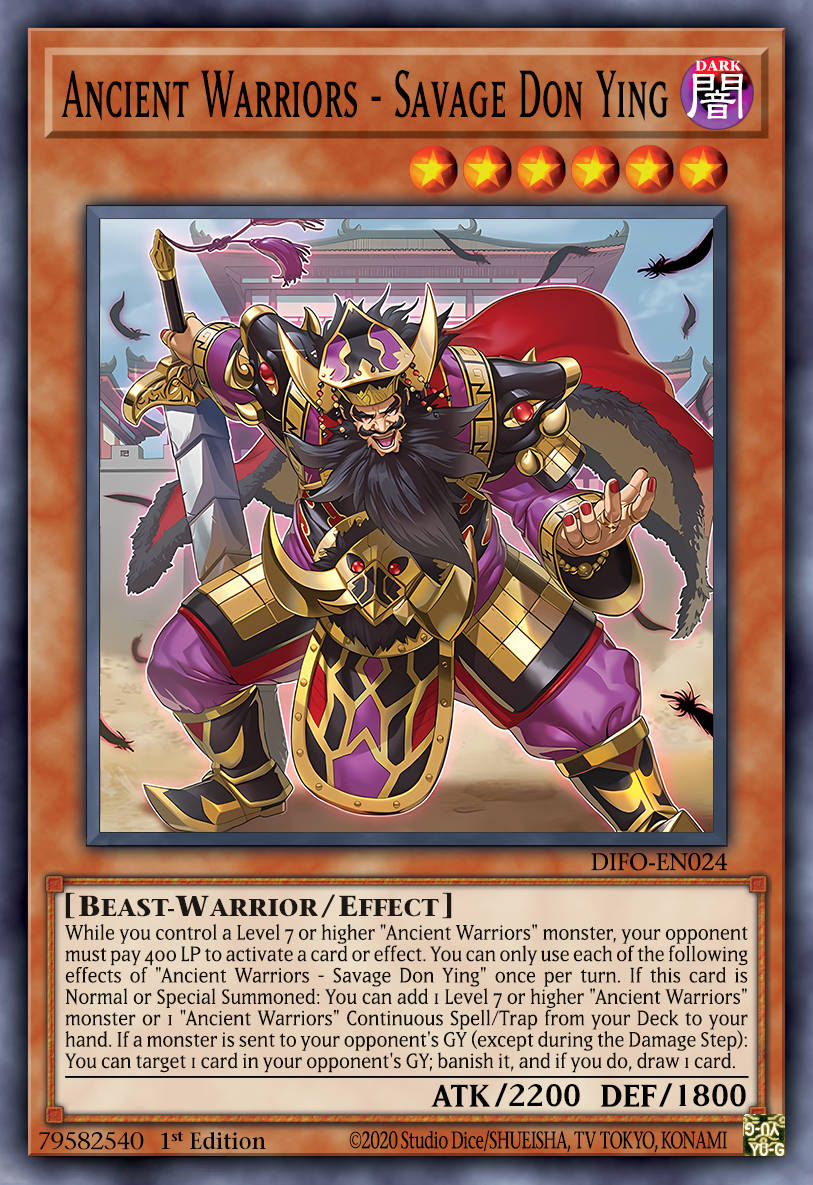
“Ancient Warriors – Savage Don Ying” is based off of Dong Zhuo. As mentioned before, the DARK-Attributed listed on the top-right of the card denotes the nation that Dong Zhuo originates from – In this instance, since Dong Zhuo is an independent warlord, he is DARK-Attribute. Additionally, his tyrannical rule over the common people is also depicted in the first line of his card text – “While you control a Level 7 or higher “Ancient Warriors” monster, your opponent must pay 400 LP to activate a card or effect”. This is a reference to how he would oppress the people with taxes for his personal gain; however, in order to do so, he needed a puppet emperor in place, hence the requirement of “a Level 7 or higher “Ancient Warriors” monster”.

Because of Dong Zhuo’s tyrannical rule, there were many failed assassination attempts on him. One such attempt was made by Cao Cao, but unlike previous attempts, Cao Cao managed to escape with his life after the attempt. After this, he called upon the assistance of many other warlords in the land using a fake imperial order, uniting 18 warlords into a singular army to combat Dong Zhuo and overthrow him. Dong Zhuo lost the battles that followed and decided to flee after burning down Luoyang, after which the 18-warlord alliance disbanded due to a lack of proper leadership.

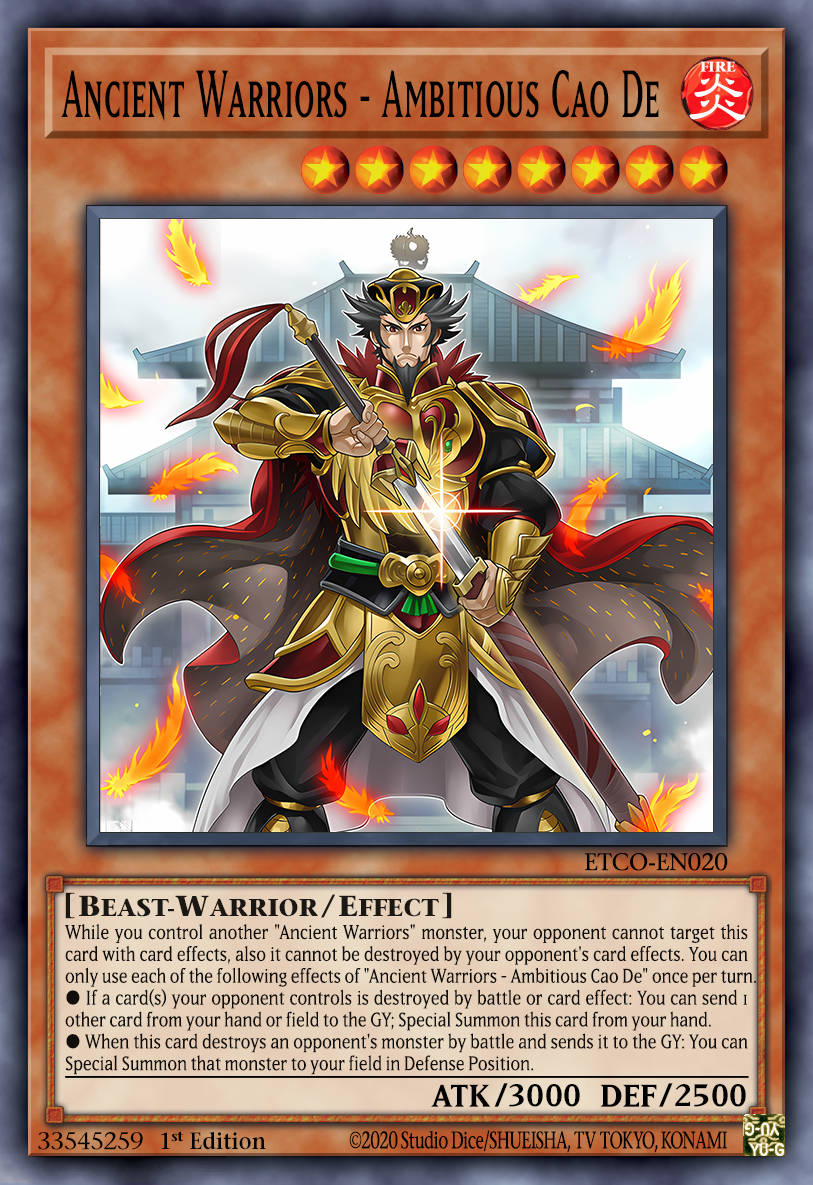
Cao Cao was from the Cao Wei kingdom, as referenced by the FIRE-Attribute on the top-right corner. Additionally, his first line of text makes him more powerful if you have another “Ancient Warrior” in play, referencing his leadership and heightened strength with allies by his side when he fought against Dong Zhuo with the 18 warlords, a contrast to Cao Cao’s assassination attempt on him, as he was alone at the time.

After fleeing from Luoyang, Dong Zhuo went to Chang’an with the remainder of his troops. However, Wang Yun, a minister of Chang’an at the time, was also plotting to assassinate Dong Zhuo. He took advantage of Dong Zhuo’s foul temper and used it as leverage for Lu Bu, Dong Zhuo’s adoptive son. Wang Yun convinced Lu Bu that Dong Zhuo did not truly care about his life, and that a blood relation did not exist between them since he was adopted. As such, Wang Yun convinced Lu Bu to betray Dong Zhuo and kill him.

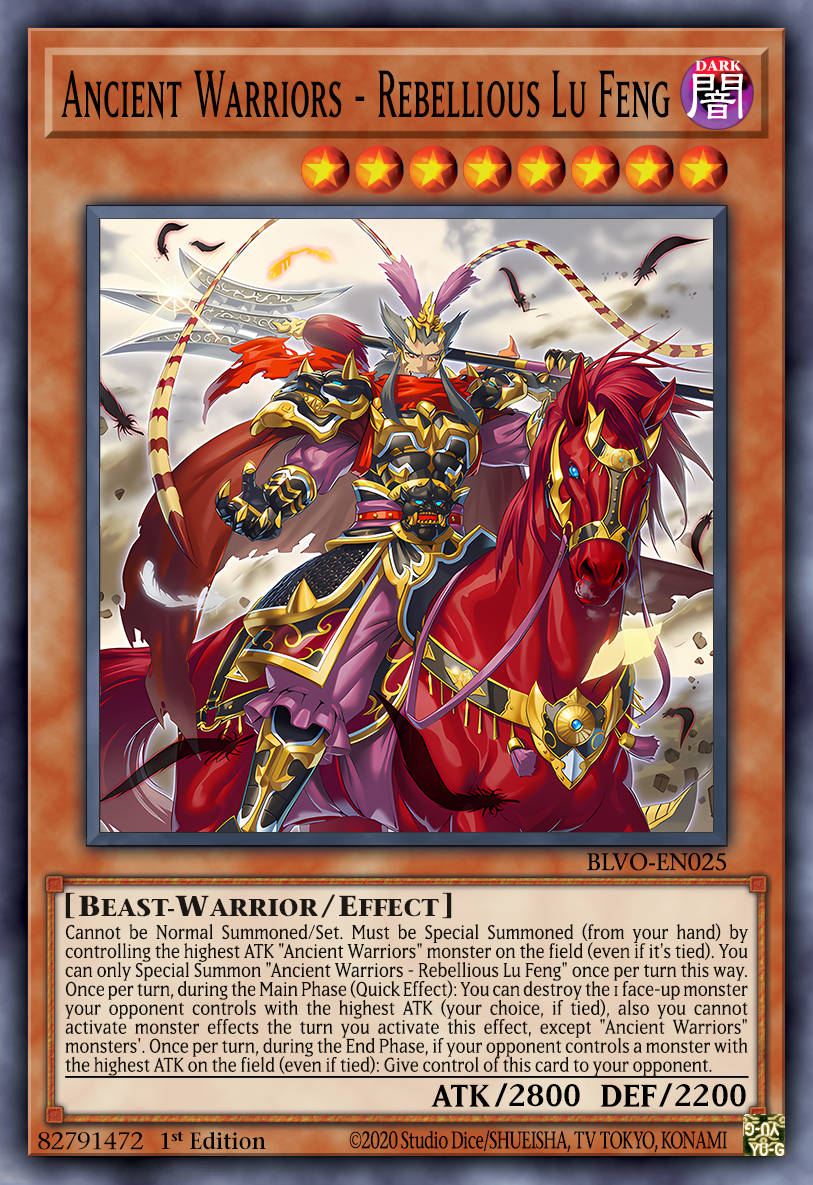
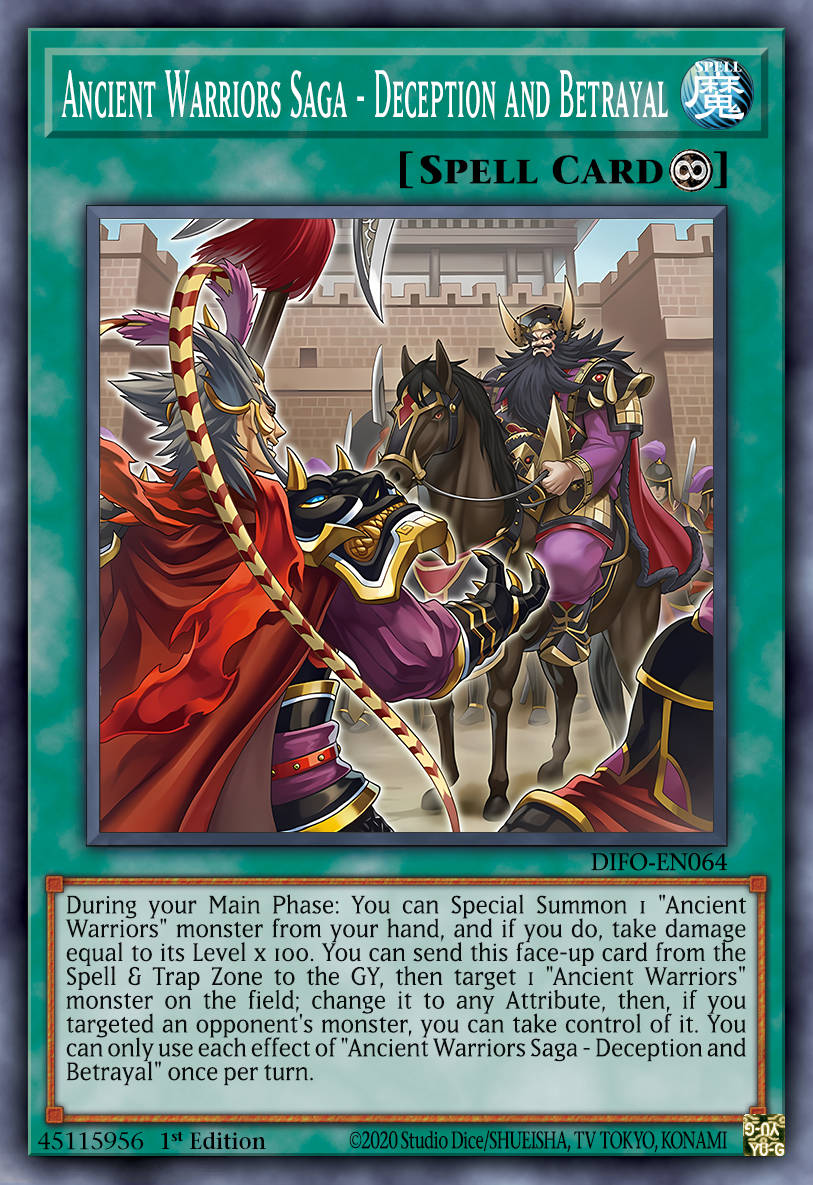
The card “Ancient Warriors Saga – Deception and Betrayal” depicts Lu Bu’s defection from Dong Zhuo. This is actually represented in the effects of “Ancient Warriors – Rebellious Lu Feng” (the card representing Lu Bu”. The card, while powerful, has a downside to potentially give itself to the opponent if your opponent has a stronger card, representing Lu Bu’s tendency to betray his allies and how he was easily manipulated by Wang Yun.

This is just the beginning of the story of Romance of the Three Kingdoms; in fact, what was just covered is perhaps less than 10% of the complete novel. You can find a complete recollection of the story here, as well as its connections to its Yu-Gi-Oh! card counterparts and references here.

Becoming Birds (当鸟) – Disillusionment in Chinese Work Culture

Browsing short-form video platforms like Youtube Shorts, Instagram Reels, or Tiktok in 2024, you might have stumbled upon the strange sight of Chinese young adults perched on their bed frames, calling out hoarse-voiced bird songs.

This trend, called 当鸟 (dāngniǎo) involves gripping a bed frame or other support with your fingers while your legs are tucked in front of you underneath an oversized shirt. This gives the appearance of your hands being bird feet and your legs ceasing to exist.

Accompanied by silly songs and off-key bird calls, the absurdist nature of this trend belies its true cultural relevance. Clues as to the meaning behind this meme can be found in one of the earlier and most popular renditions of this meme, posted on Douyin on May 15, 2024 by user 无所事事的π先生 (Mr. Do Nothing Pi).

The caption in Chinese reads: “I’m not studying anymore, I’ve become a bird,” while the English alternative caption reads “Screw it, I’m just gonna go with the flow.”

Mr. Do Nothing expresses his frustration with his studies, and ironically broadcasts his intention to seek a simpler life “going with the flow” as a bird.

当鸟 memes found its audience not only at home in China, but also abroad, where this strange manifestation of youth angst was reported in outlets such as the NYT and the Guardian as part of a larger trend of frustration with Chinese work culture among the nation’s youth.

The New York Times cited Dr. Xiang Bao of the Max Planck Institute for Social Anthropology, who says that as the Chinese economy slows, its youth are seeing their future fade away and the promised fruits of meritocracy slip from their grasp. The resulting disillusionment has fueled a number of cultural moments which share a resemblance with 当鸟.

当鸟 in Context: Burnout and Disillusionment in Chinese Work Culture

One can’t discuss Chinese work culture without discussing the “996” schedule, used to describe working from 9 AM to 9 PM, 6 days a week. This is a practice especially prevalent at big companies that fuel China’s growing technology and financial services sector.

This grueling work schedule has combined with diminishing youth prospects to fan the flames of disillusionment.
Chinese young adults today face higher home prices and lower homeownership rates, especially in large expensive metro areas like Shenzhen, where the average home costs 43 times median annual income.

The employment situation provides little comfort, with an economic slowdown and increasing competition in the job market leaving many college graduates unemployed. In fact, when the 16-24 youth unemployment figure reached a high of 21.3% in June 2023, western onlookers noted that the Chinese statistics bureau had ceased publishing the figure (it has since resumed, with an updated formula.)

There is a growing perception that regardless of how hard you work to earn an education or find a job, you’re going to be fighting an uphill battle through your whole life.
It is against this backdrop that movements like “Laying Flat” 躺平(tǎngpíng), and “Display Rottenness” 摆烂(bǎilàn) have their roots.

Comparing with “Laying Flat” 躺平(tǎngpíng), and “Display Rottenness” 摆烂(bǎilàn):

躺平 speaks of relaxation and inaction as a means of rebelling against a society which valorizes sweat and hard work, but doesn’t seem to be giving much in return.
摆烂 actively endorses apathy, advocating for letting things degrade when you see issues, rather than expending your own energy to intervene.

Although the 躺平(tǎngpíng) and 摆烂(bǎilàn) movements mentioned previously share an end goal with 当鸟 of removing oneself from the endless grind of Chinese work culture, they have a distinctly nihilistic flavor. They advocate for rejecting that which society deems valuable such as hard work and material wealth, and even rejecting your perceived duty to perform your best in work and school contexts.

On the other hand, 当鸟 has a more aspirational air to it, with students embracing a moment of light-hearted, absurd joy as a means of combating the troubles of their life and imagining a simpler yet more meaningful existence.

The New York Times quotes an interviewed student Wang Weihan, who states that “Birds can fly free and aimlessly in the sky,” and that they portray “the innate desire within every person for freedom.”

Conclusion

Although this meme of “Becoming a Bird” 当鸟 has spread beyond its original purpose as an outlet for student anxieties, such as this child on Douyin presumably not besieged by the anxieties of Chinese work life, it is impossible to remove it from its original context.

Already, we’re seeing Chinese society tackling the issue of youth and labor disillusionment. Some large companies, motivated by the already toxic “996” culture mutating into “007” culture (in which you are are on call 24/7) have implemented mandatory time off and other policies that would have their employees work less.

As the Chinese government and Chinese society continue to navigate the 21st century, memes like 当鸟 and 躺平 serve as cogent and timely reminders to re-evaluate exactly how much should be sacrificed in pursuit of increased productivity and global competition.

Perseverance and Hope During the Cultural Revolution

“The support between husband and wife”

In this interview, a man born shortly after the beginning of the Cultural Revolution recounts his research into the psychological factors behind whether someone would be able to survive or not through the suffering they endured. He arrives at a rather counter-intuitive conclusion: that it was not material conditions, but primarily the bond between husband and wife, and family writ large, that determined one’s ability to persevere.

He notes many cases of success, including the noted Wang Meng, who would go on to become a Minister of Culture for China later on in the late 1980s. He notes how, throughout his experience when sent away to Xinjiang, he was able to maintain his optimism through the support of his wife. However, I would like to add onto this portrayal of his experience. What his relative success shows is that having some kind of support structure, some kind of mental mechanism to cope with the harshness of life, he was able to find meaning through his suffering. In fact, later on, the basis for many of his most famous novels and short stories would come from his experiences during the Cultural Revolution, giving him the ability to not just survive, but even flourish long after his imprisonment ended, demonstrating the importance of purpose and meaning when surviving in light of dire odds.

On the other hand, he also recounts the example of Li Rui and the sense of alienation he must have felt during his experience. Going from being Mao Zedong’s personal secretary, he had the unfortunate fate of being banished to Anhui to undergo “reform through labor” for nearly two decades. Whereas his material separation from Beijing may have been startling on its own, it was his emotional separation from his wife that most characterized his dire circumstances, with his relationship transforming from one of mutual love and respect to enmity and distrust. From enjoying the emotional comforts of family, he now was labeled a “rightist” and denounced by his loved ones, sapping him of the psychological purpose to persevere through adversity. Ultimately, he would pass away in 2019, detached from his former family and censored by the very Party he had sacrificed his career for.

“Hope in Prison”

In this interview, a survivor of the Cultural Revolution describes his shock regarding the treatment of people during the 60s, and attempt to find meaning amidst what he saw as an otherwise senseless campaign. Unlike the previous interviewee, he notes how, upon being accused of being a spy due to his family’s Christian faith and overseas relatives, many of his siblings made a clean break with his father, taking an “evasive attitude” simply to preserve themselves. He recounts how, not sharing his siblings’ evasiveness regarding their father, he, too, was eventually imprisoned.

There, he experienced a complete alienation of his relationship with the outside world, finding no purpose in living in a world where he was not afforded the basic dignity, respect, or comfort others seemed to enjoy.

However, it was the kindness of strangers, including the company of one of his very captors and the support at work of people he thought of as dangerous convicts, that have him the motivation to live. Despite the bad hand society had dealt him, he nonetheless maintained his conviction that, even if the people around him were “bad guys,” they must have had some goodness in them.

Version 1.0.0

This reminds me of Viktor Frankl’s own reflections in his classic memoir Man’s Search for Meaning, where he describes how simply the hope of one day being free gave him the psychological will to continue living. In much the same way, this man’s embrace of hope over bitterness, of life over death, enabled him to persevere despite it all.

“God Smiled Upon Us”

Ending on an optimistic note, in this interview, a former Sent Down Youth sent to the countryside in the “Up to the Mountains and Down to the Countryside” movement speaks of the extraordinary role of luck in his ability to persevere through the Cultural Revolution. For him, the life in the grasslands, while certainly tough, was at least stable and away from the chaos exhibited elsewhere.

Working in the Inner Mongolian region of China, he was able to immerse himself in the nomadic lifestyle of its inhabitants, being able to satisfy his intellectual curiosity in a way that was inaccessible to many affected by the movement elsewhere. Despite having to “learn everything from the beginning,” he found meaning in what he saw as a “new and magical place,” maintaining optimism that he could “learn and master everything.” His unusually positive recount of his experience as a Sent Down Youth is thus an outgrowth of the sense of purpose and belonging he found in being able to explore a hitherto new land. This sense of meaning that allowed him to persevere, if not flourish, is so ingrained in him that he mentions how, to this day, he still visits the grasslands every year.

牛马 (niúmǎ): Beasts of Burden in the Workforce

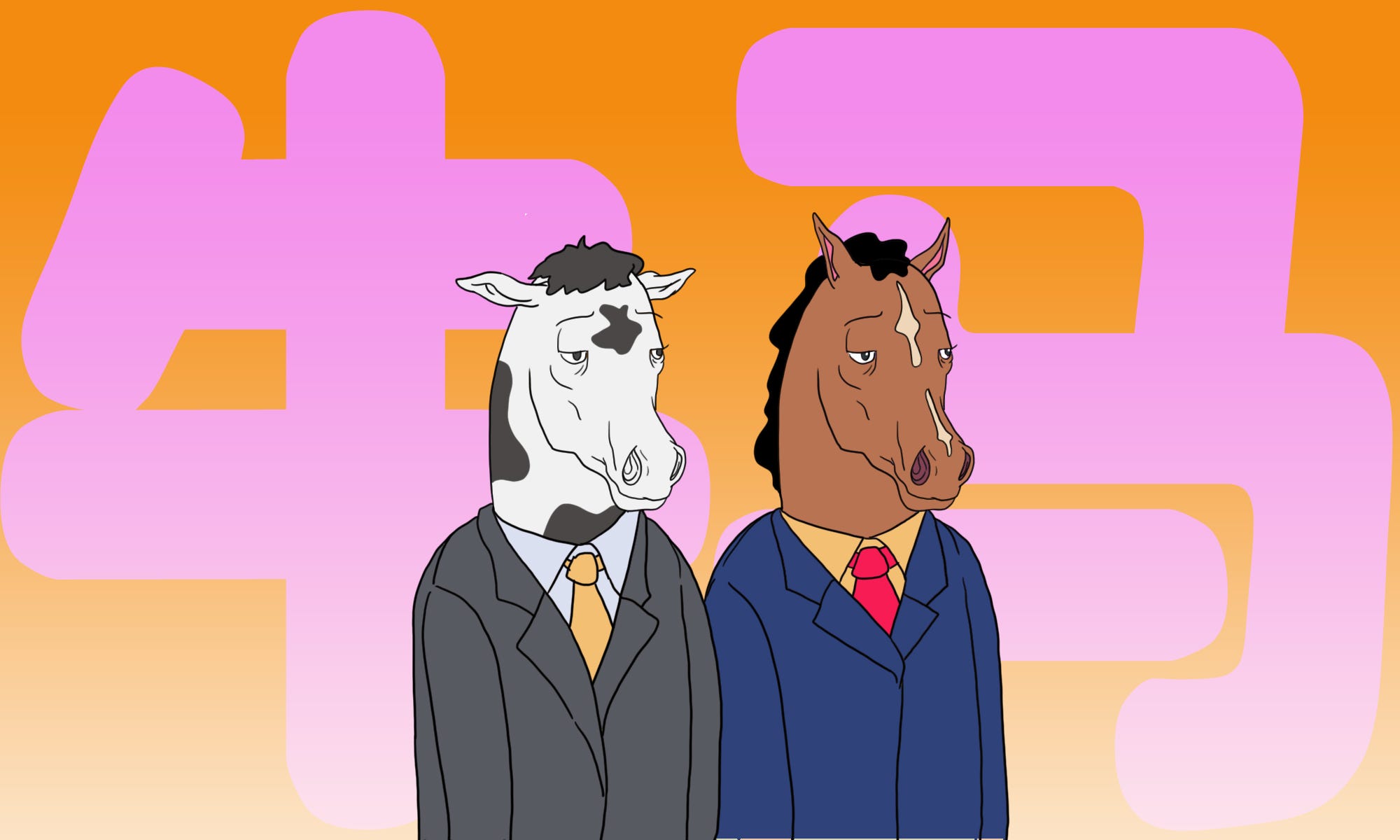
牛马 (niúmǎ) literally translates to “cow and horse”, two traditional beasts of burden which many young Chinese workers in modern times can relate to. It has become a popular internet slang term, used in a self-deprecating way by young netizens to describe themselves as overworked and undervalued in the workforce. This term reflects the feelings of helplessness and unimportance common among the young working class, where many have resigned themselves to a life of mundane labor with no real opportunity for change.

Origins and Evolution

Despite its recent rise to popularity in Chinese social media platforms, 牛马 has been used a metaphor for hard laborers since ancient times. One of the earliest recorded uses of 牛马 is in Shiji by Sima Qian all the way back in 91 B.C. In this historical text, he uses it to refer to farm workers who start their work days early and return home late. The term originally had a positive connotation, used to describe the hardworking nature of these laborers as well as illicit sympathy for these conditions. Over time, it came to encompass not just farmers but any kind of worker working long hours for inadequate compensation.

In recent years, 牛马 has gained traction on Chinese social media platforms such as Douyin, Weibo, and Zhihu. It is used by netizens in a satirical way to both joke about their unfavorable situation as well as criticize the system that forces them to work long hours. The slang is particularly common among people working in tech and e-commerce, and many memes focus on office workers rather than traditional blue collar laborers. These workers feel as though they are nothing more than cattle and horse, with large corporations working them from morning to night with little rest or pay.

This image has an empty alt attribute; its file name is Screenshot-2025-04-13-at-7.21.50PM.png

牛马 spread very quickly due to the large number of users posting and sharing it through short videos, live broadcasts, and comments. The feelings of anxiety and fatigue from overwork were so prevalent among netizens that 牛马 was able to gain a large amount of traction in a short amount of time.

Cultural Significance and Online Uses

The impact of 牛马 lies in its duality as a symbol of both resignation and resistance. It captures the feeling of young Chinese workers who are stuck between wanting to escape this kind of lifestyle and wanting to climb the social and financial ladder.

Resistance

Many netizens use the term 牛马 as a form of resistance and criticism towards the hypercompetitive, unbalanced work culture prevalent in China. 996 culture is very common in tech companies in China, requiring employees to work from 9 a.m. to 9 p.m. 6 days a week. In order to get to the 72 hour work week without violating Chinese labor policies, employees must work voluntary overtime, which is basically forced through peer pressure and risk of being laid off.

By calling themselves 牛马, workers perform a sort of soft resistance where they acknowledge that they are being exploited and can put a name on what these corporations are using them as. Further, by making jokes about their situation and comparing themselves to working animals, they can bring to light the absurdity of these working conditions.

In this viral Douyin, the creator lists all the work benefits cattle and horses have over modern workers such as getting work off on rainy days, getting off work when the sun goes down, and having food accommodated. He then satirically asks, “How can you say you are 牛马?”.

Resignation

Many netizens have resigned to the fact that in order to achieve the quality of life they desire, working as a 牛马 is necessary. Thus, posting about it online is a sort of coping mechanism, where young 牛马 can find solidarity with other 牛马 on social media platforms by sharing memes and satirical jokes of their bleak situation.
One Zhihu user jokingly posted:

“When a cow is tired, it knows to rest. When a 牛马 is tired, it will order coffee.”

Another netizen posted the following video on Douyin:

Workers see themselves as mere working animals to their employers, and their ID tags are akin to the yokes that cattle carry. Just like these cattle who are forced to work by their masters, young workers also see no reasonable escape from this lifestyle. One alternative to this lifestyle is the 躺平 (tǎngpíng) movement, which means “lying flat” and is characterized by young, burnt-out workers refusing the grind and pressure of long working hours. These people will work just enough to survive, rejecting overtime and accepting their place in the social ladder. However, factors such as job insecurity, social pressures, and disapproval of relatives make 躺平 undesirable for many young workers, leaving 牛马 as the best choice for them.

Conclusion

牛马 is very significant as a tool for young workers to band together and face the exploitation that they face from employers. It reveals a large problem of overwork and societal pressure that many young adults face in modern Chinese society. Perhaps these issues are rooted in ancient cultural values such as hard work, hierarchy, and duty. Beyond just the workforce, children in China are taught to exert themselves to the max and try to climb the social ladder from the moment they enter school. Exam scores and rankings are made public to students to enforce a sense of social standing, cram school culture forces many students to focus all their time on their studies, and the Gaokao enforces academic filtering to an extreme degree. These are all symptoms of the deeply ingrained belief that personal worth is tied to status and achievement, a belief that is enforced by both the government and long-standing cultural values. In this context, perhaps embracing the label of 牛马 is an act of silent rebellion among the youth against the system that made them into 牛马.

The Romance Reshaped – Total War: Three Kingdoms

“The empire long divided, must unite; the empire long united, must divide. Thus it has ever been.”

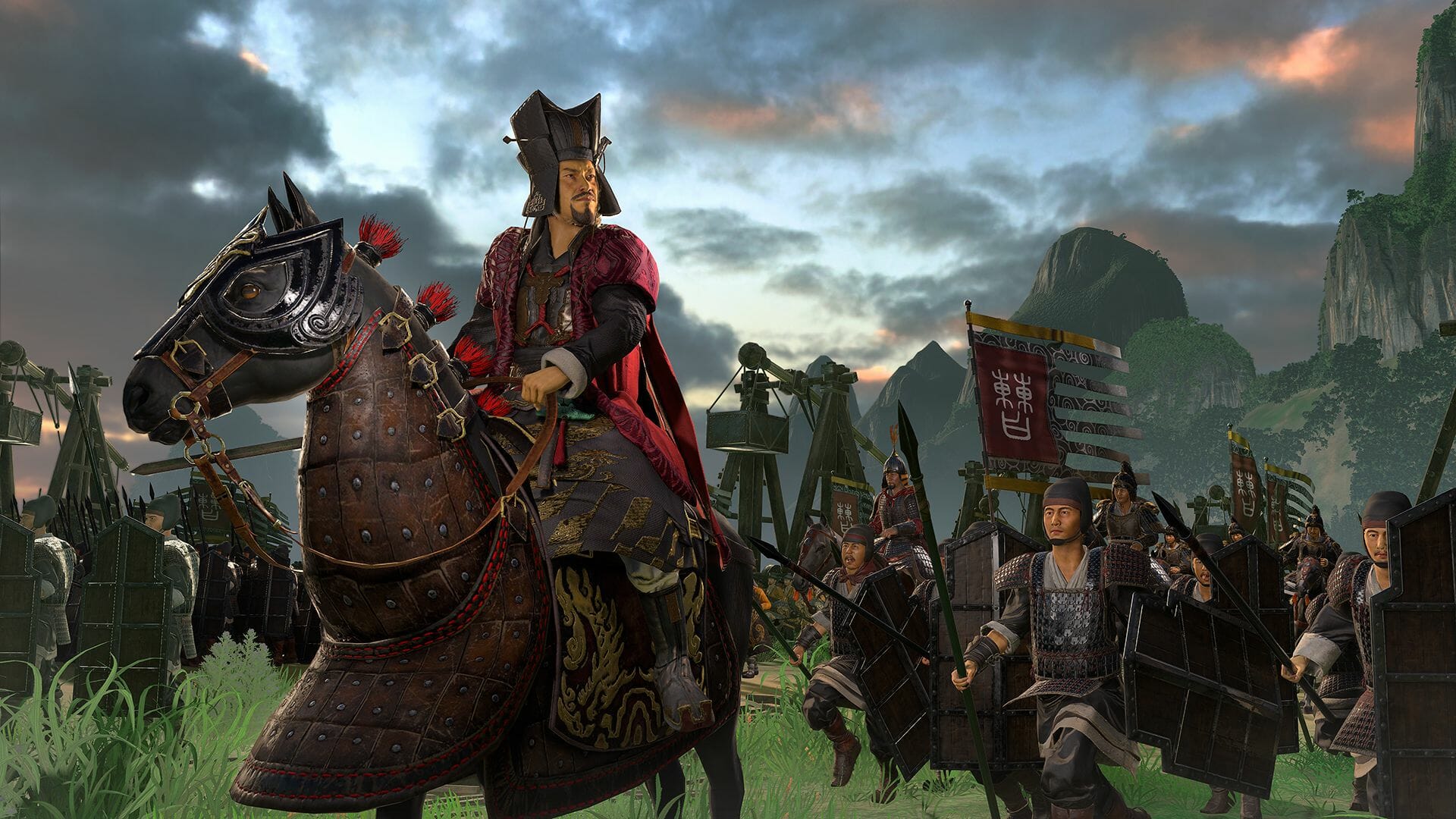
Cover art for total war three kingdoms
Cover art for Total War: Three Kingdoms

Released in 2019, Creative Assembly and Sega’s 12th installment of the Total War franchise takes a new spin on a cornerstone of Chinese culture: the Three Kingdoms period and Luo Guanzhong’s historical epic The Romance of the Three Kingdoms.

Originally written in the 14th century, The Romance of the Three Kingdoms dramatizes the fall of the Han Dynasty, the rise of powerful warlords, the founding of the Three Kingdoms, and the eventual reunification of China under the Jin Dynasty. As one of China’s Four Great Classical Novels, The Romance of the Three Kingdoms has transcended the bounds of culture and history, with adaptations and reimaginations in the form of films, spin-off books, and more.

Total War: Three Kingdoms allows players to experience the romance like never before. With character-based campaigns, real-time tactical battles, and pivotal decision-making mechanics, those who play can rewrite the story of the Three Kingdoms in completely new ways.


Origins: The Romance of the Three Kingdoms

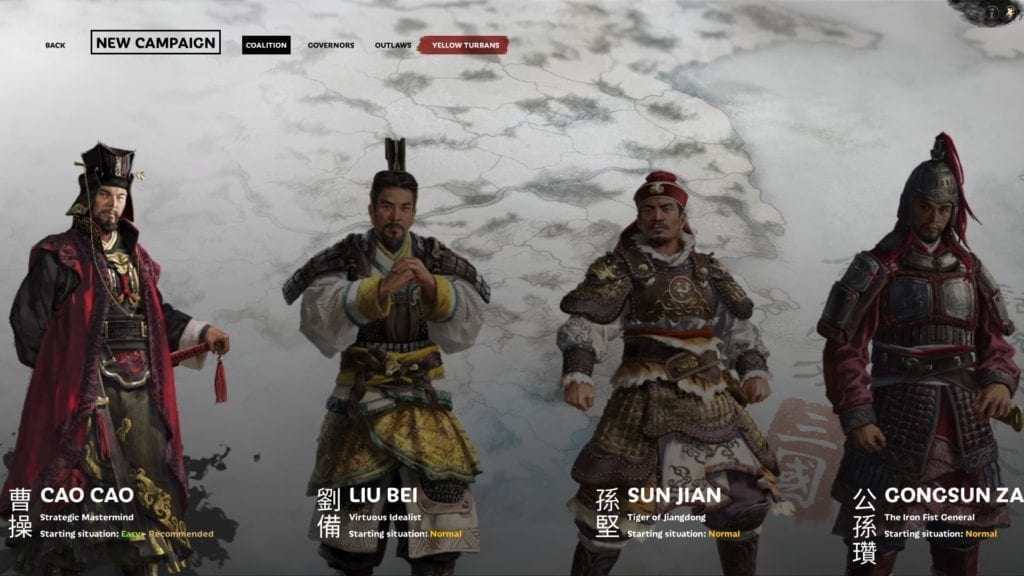
Blending history, legend, and myth, the original novel recounts the chaotic Three Kingdoms period. Beginning during the fall of the Han Empire, the epic gives a dramatic, semi-fictionalized account of the roughly 100 years from 184 AD to 280 AD. We are introduced to iconic figures like Cao Cao, cunning strategist and leader of Wei; Liu Bei, the virtuous and benevolent leader of Shu; and Sun Quan, the pragmatic and cautious leader of Wu.

depiction of cao cao, liu bei, and sun quan
Depiction of Cao Cao, Liu Bei, and Sun Quan

The epic recounts the early rise of Dong Zhou, his betrayal at the hands of Lu Bu, and the Rise of the Three Kingdoms following Lu Bu’s defeat. Throughout the novel, Luo Guanzhong explores ideas of righteousness, honor, and the pursuit of harmony amidst an era of chaos.

Importantly, Guanzhong’s writing was also heavily influenced by Confucian ideals of morality and the Mandate of Heaven. Liu Bei is often portrayed as the rightful heir to rule the land because he is favored by the heavens. Cao Cao, despite his reputation as a cunning strategist and control over the emperor, is often portrayed in a negative light due to a “lack of virtue.”

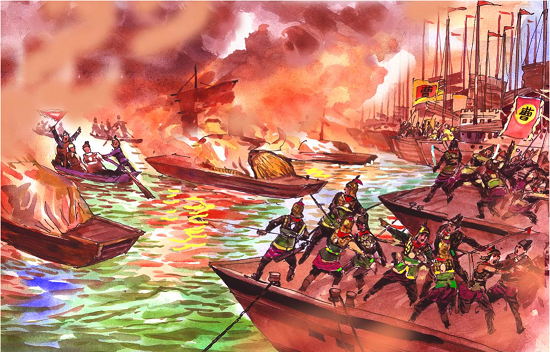
depiction of the pivotal battle of red cliffs
Depiction of the pivotal Battle of Red Cliffs

Throughout the chaos of frequent battles and shaky alliances, the novel emphasizes loyalty as the highest virtue, righteousness over personal gain, and that cleverness alone isn’t enough; it must serve morality to earn the Mandate of Heaven.

Ultimately, the Three Kingdoms came to be united under the Jin Dynasty that sprang from Cao Cao’s kingdom of Wei.

Despite its cultural precedence, modern audiences may find engaging with the novel difficult. Spanning over 800,000 words, the romance can be overwhelming due to its assumptions of Confucian knowledge, court politics, and dynastic customs.


Total War: Three Kingdoms

game engine image of total war three kingdoms
Game engine media for Total War: Three Kingdoms

Luckily, Total War: Three Kingdoms provides an interactive way for modern audiences to engage with the classic story of the Three Kingdoms. Blending turn-based strategy with real-time tactical battles, the game allows players to step into the shoes of the warlords of the story, featuring Cao Cao, Lu Bu, Liu Bei, and many more playable leaders.

character select screen from total war three kingdoms
Character/Faction selection screen from Total War: Three Kingdoms

Just as the warlords of the period vied to unite China under their rule, players work to expand their territory through diplomacy, conquest, and alliance, all while managing the economy, resources, and characters of their empire.

Gameplay demo for Total War: Three Kingdoms

The game allows players to choose between two modes of play: Romance or Records. Based on the legendary and epic nature of Luo Guanzhong’s novel, the Romance mode portrays generals as superhumans with exaggerated abilities. The game takes the fantastical romance of the novel a step further, with characters engaging in epic duels, defeating entire armies, and acting as near-mythical figures.

mode select screen for total war three kingdoms
Mode select for Total War: Three Kingdoms

On the other hand, the Records mode reflects the historical accounts of the Three Kingdoms period. This mode is both grounded and realistic, where generals act as regular units, and tactics and formations triumph over heroics and legendary feats.

Total War: Three Kingdoms launch trailer

Regardless of which path is chosen, the game immerses players in an interactive world rich with Chinese culture, with menu screens inspired by traditional brush painting, music evoking harmony and balance, and Confucian-inspired gameplay systems such as character traits and legitimacy. The game allows players to not just play as Chinese warlords, but lead according to Chinese cultural values.


Reshaping the Romance

Although Total War: Three Kingdoms honors both The Romance of the Three Kingdoms and the history of the Three Kingdoms period, it is not simply another retelling of the same story, but rather, a chance for players to forge a new narrative.

cao cao's virtues and traits screen
Cao Cao virtues/traits screen

Perhaps the most significant interpretive choice of the game is the reduction of the Confucian moral binary. This choice not only modernizes the story for a global audience but also invites players to expand upon the themes originally presented by Luo Guanzhong. Throughout their campaigns, players rethink what power, virtue, and legitimacy truly mean. The Confucian lens of the romance guided readers’ judgements, but in the game, characters are cast not in moral roles, but as leaders with agendas, strengths, and weaknesses.

Players have the opportunity to engage with moral ambiguity, deciding for themselves if power without virtue is truly hollow, if ambition is not simply corruption, but adaptation. Players will frequently be presented with choices of mercy or brutality, and violence or alliance. Through their choices in the game, players do not just read of betrayal, but commit it and come to justify it.

Rather than rewarding moral absolutism, the game invites ethical exploration, transforming a story of predestined virtue and villainy into an open-ended meditation on leadership, agency, and power.


Three Kingdoms Across the Globe

Peaking at 191,816 concurrent players on Steam Chats, Total War: Three Kingdoms was a global success, bridging Eastern Historical narratives and Western audiences. The game has brought one of China’s Four Great Classical Novels to the screens of players as a global interactive experience. Players are not just exposed to Chinese culture, but immersed in it through the progression and mechanics of the game. Through interpretive choices and flexible gameplay, Total War: Three Kingdoms has been solidified as a fantastic reimagination of The Romance of the Three Kingdoms, that has and continues to serve as a global conduit of exploration for Chinese literature, history, and philosophy.


Source Material

Total War Cover Image

Three Kingdoms Rulers Portrait

Battle of Red Cliffs

Total War Game Engine Image

Character Select

Mode Select

Cao Cao Traits

鸡汤(Jītāng): Chicken Soup

Introduction and Meaning

鸡汤, known in English as chicken soup, is a Chinese slang for advice that does not solve a person’s problems but makes them feel better. It also references bite size content that tells the user that everything will be okay, and the problems will be solved, even if we don’t do anything. Simply put, it’s useless encouragement or comfort. Another meaning it has is sentences or phrases that makes people more optimistic.

“只要你努力,一切皆有可能。”
(“As long as you work hard, anything is possible.”)

Origins

It originates from the 1993 book series, Chicken Soup for the Soul, that was filled with feel good and cheesy essays. The series was compiled by Jack Canfield and Mark Victor Hansen. It gained traction in the early 2000s, as Chicken Soup for the Soul was translated and widely read. The books were great ways for people to get anecdotes that comforted the reader. As more social platforms like Weibo, WeChat, or Douyin became commonly used, 鸡汤, developed into having a more negative connotation as it was the response to positive messages. Netizens used it more as a mocking phrase, suggesting positive statements were unrealistic and manipulative.

Usage and Further Interpretations

鸡汤 originally was used to express warmth, nourishment and healing, as that was what chicken soup felt like. On the internet, it became a metaphor first for messages that promoted positivity. Motivational messages felt like chicken soup, helping alleviate stress. Overtime it developed its now new meaning of “toxic positivity”. 鸡汤 is a used within online discussions and answers to statements that only give encouragement. Example: Person A: Hey, as long you are trying your best you can make it. Person B: Thanks for the chicken soup. Another way that it is used is 毒鸡汤, or poisonous chicken soup. It is used as a two-sentence combination where the first part is positive then leads to a negative sentence. 毒鸡汤 is also used as responses when someone gives a brutally honest advice that counters the frequently given motivational messages.

“阳光总在风雨后” (“The sun always shines after the storm”)
“只要你坚持,没有什么是不可能的” (“As long as you persevere, nothing is impossible”)

These would at first be examples of possible 鸡汤 for netizens to obtain hope or emotional help in tough times, but 鸡汤 ending up being the response to these. Netizens became more skeptical of such idealistic sentiments. Rather than seeing these messages as helpful, people began to view them as shallow, manipulative, or even exploitative.

Cultural Significance and Social Context

The main cultural significance of “鸡汤” is deeply tied to the social and economic conditions during the time period facing contemporary Chinese youth. During the 1990s and early 2000s, these the working class or youth that have reached working age are experiencing the periods of rapid growth, urbanization, and intense competition. Despite growing up in a relatively prosperous society, they face surmounting pressure from family, employers, and the educational system. Many jobs have a developed a “996” work culture. Forced to work from 9 a.m. to 9 p.m. 6 days a week builds stress. This mostly likely lead to the first literal definition of the term. The working group found joy within the “鸡汤” messages. As the years go by, as jobs become scarcer, and obtaining a chance for a better school is limited, the future looked bleak to netizens. As the youth culture shifted from a positive view on the future towards a more skeptic and ironic view, the meaning of the words “鸡汤” flipped. A boss who tells employees, “Success comes to those who work the hardest,” while denying raises and pushing unpaid overtime, might be accused of feeding them “老板的鸡汤” (“the boss’s chicken soup”). It also acts as a meaning for emotional manipulation, demanding more while giving less. It fits into a larger ecosystem of slang and memes that reflect the lives of young Chinese citizens. Other terms like “内卷” (involution) describe the exhausting, unproductive competition in school and work, while “躺平” (lying flat) expresses a passive refusal to engage with unrealistic societal expectations. Together with “鸡汤,” these terms represent a quiet form of rebellion—language that exposes the gap between the realities of school and work in China with the social ideals implanted into them.

Appropriation, Commercialization, and Resistance

Commercialization of “鸡汤” was the development of the many emotional languages or slogans within companies and some that promote the unhealthy “996” work culture. Schools and workplaces often have posters or signs that emphasized hard work, self-sacrifice, and loyalty. Adverting campaigns and media would often use “鸡汤” to promote social harmony and downplay the inequality or collective struggle.

Resistance in this case, takes the form of parody and irony by turning the definition on its head. By using “鸡汤” quotes and mixing them with dark humor or absurd logic, “鸡汤” developed more of a negative meaning. This ironic distance matters. It suggests that young people today are no longer satisfied with shallow positivity. They desire authenticity, solidarity, and alternative narratives that answers to their pain, skepticism, and frustration. It also acts like a device that allows the youth to express and find comfort in others that are in a similar situation. That they aren’t the only ones faced with pressure that they will not achieve what they wish. In criticizing “鸡汤,” they are not abandoning hope itself, but demanding realistic answers and responses to the bleak future that they see.

White Snake

Origins

“The Legend of the White Snake” is one of China’s most beloved folk tales, with origins tracing back more than a thousand years. Over the centuries, it has been passed down through many different formats, including operas, literary adaptations, and movies, changing slightly with each retelling to suit the climate of the times. The story mostly revolves around the romance between Bai Suzhen, a mystical white snake that can take the form of a beautiful woman, and Xu Xian, an ordinary mortal man. Their love faces severe trials, mostly from the Buddhist monk Fa Hai, who considers the relationship between a supernatural being and a human unnatural and totally unacceptable. Universal themes such as love, morality, transformation, and societal expectations make the narrative deeply relatable to a wide range of audiences.

The original tale, especially in its earliest forms, strongly promoted rigid Buddhist values, emphasizing morality through clear distinctions between good and evil, natural and supernatural. In these traditional versions, Fa Hai is portrayed positively as a righteous guardian of morality. He fiercely condemned unorthodox relationships and female sexuality, which were perceived as threatening societal stability / religious purity. Bai Suzhen, despite her sincere love for Xu Xian, mostly served as a cautionary figure representing feminine seduction and transgression. This rigid moral stance reflected Buddhism’s strong influence during the period, reinforcing traditional gender norms and discouraging boundary-crossing relationships.

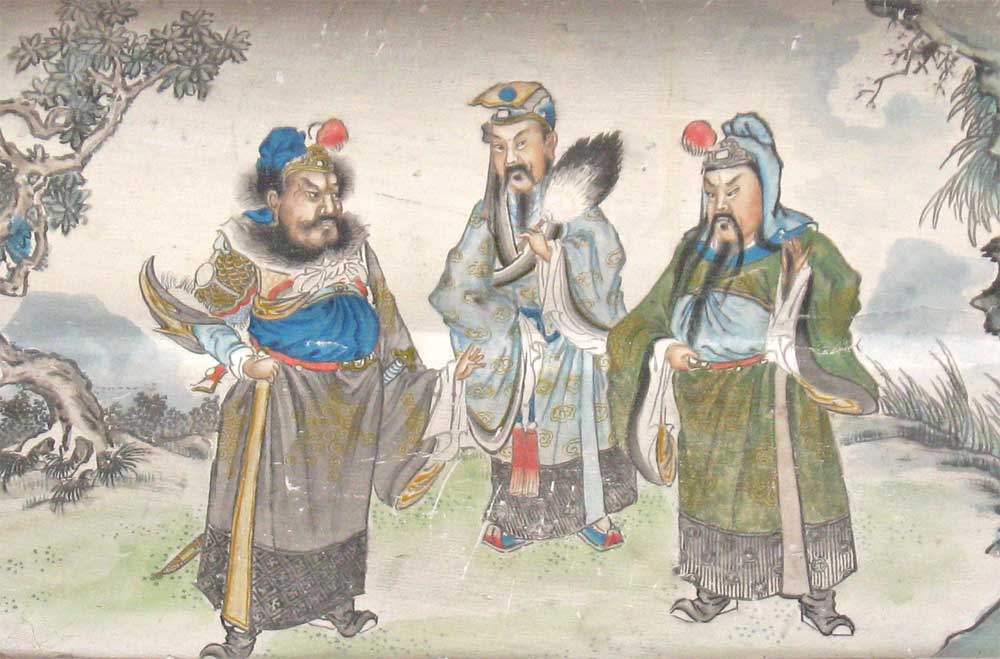
Painting from the Summer Palace in Beijing depicting the legend

Modern Retelling

One particularly compelling global adaptation of this traditional narrative is the 2019 animated film “White Snake” produced by Light Chaser Animation Studios. The film follows Blanca, a white snake spirit that can take human form, as she embarks on a mission to stop a powerful Taoist general from achieving immortality at the cost of countless snake lives. During the failed mission, she loses her memory and is rescued by a kindhearted young man named Ah Xuan, who happens to be a snake-catcher. As Blanca searches for clues about her identity and the world around her, a romance arises between them. However, their love is soon tested by forces from both the human and supernatural realms. Unlike many traditional adaptations that focus on moral and ethical dilemmas, this film explores identity struggles, power dynamics, and self realization. Set as a prequel, the film gives much more depth to Bai Suzhen’s story by showcasing her life before her famous relationship with Xu Xian, providing new contexts and layers to the age-old tale.

Promotional image for White Snake movie

Blanca’s amnesia following her failed mission serves as a powerful narrative device, emphasizing questions of personal identity, free will, and the exploration of one’s true self. Her memory loss resets her understanding of the world as well as herself. It removes any preconceived notions of allegiance, morality, and purpose that she may have accumulated. Through Blanca’s eyes, we see a gradual reconstruction of who she is. Her amnesia is a vehicle for transformation. By forgetting who she was, Blanca is able to become someone new, someone who questions authority, feels empathy for humans, and reconsiders her previous mission. This invites viewers to think about how identity is shaped not only by memory, but also by the choices we make everyday, choices which can be free of the road we have traveled thus far. It may make audiences reconsider the momentum of their own lives and decide to rethink what is truly important to them.

White Snake movie trailer

The film empowers Blanca through a far more nuanced character development, aligning with modern perspectives on agency and female empowerment. Traditionally, Bai Suzhen was  portrayed as a passive figure whose destiny was controlled by the oppressive interventions of Fa Hai. However, “White Snake” portrays Blanca as a powerful and proactive character, someone who actively shapes her destiny through her choices. By confronting oppressive structures, Blanca’s character emphasizes personal autonomy and resistance against oppression, a huge deviation from her original portrayal as a two-dimension vixen that must be vanquished by religious and moral authority.

Another stark difference is the treatment of religious authority figures like Fa Hai. In the traditional version, Fa Hai represents a kind of unquestionable moral authority, backed by Buddhism and the social order it reinforces. In “White Snake,” however, this type of rigid authority is absent, replaced instead by more nuanced questions about who holds power and why. This reflects broader cultural changes, as where the old story emphasized obedience and conformity, the new version emphasizes choice, complexity, and resistance to dogma. It reflects a modern sensibility where people are much more questioning of power structures in society, both religious and governmental. 

Ultimately, the 2019 animated adaptation “White Snake” revitalizes “The Legend of the White Snake” by transforming it from cautionary folklore (and potentially Buddhist propaganda) into a profound exploration of identity, choice, and empowerment. By expanding traditional narrative boundaries and using visually captivating storytelling, the film introduces timeless Chinese folklore to global audiences. It shows how ancient stories can evolve to maintain relevance, delivering enduring messages that resonate deeply across different cultures and generations.

Beasts of Burden (牛马, niúmǎ)

“Nobody would call an ox at midnight asking it to plow the field again in a different direction, but corporate livestock have to redo their assignments again and again.” -Weibo user, 2024

Meet Zhang Fei. She’s 22 years old and works at Pinduoduo, a tech company in Shanghai. She hasn’t seen daylight in months. Fei often jokes to her friends: “I’m not human anymore. I’m 牛马.” They laugh, not because it’s funny, but because it’s true.

Why Beasts of Burden?

A direct translation of 牛马 (niúmǎ) is “cattle and horses.” But in today’s digital slang, it means something far more complex: an identity worn by millions of overworked, undervalued young Chinese workers. The term “Beasts of Burden” captures the exhaustion of a generation that feels less like people and more like laboring animals. But why “cattle and horses”? Why not robots or drones? There’s a poetic cruelty in the choice. Cattle and horses are traditional work animals. They are respected, even cherished, but ultimately just something functional and practical. They are never asked if they want to work; they simply do. And yet, unlike the modern Chinese worker, animals are often given rest, food, and protection.

As one viral post on Weibo said, “High-quality livestock get a one-day break for every day worked, while high-quality workers push themselves to work 24 hours a day, seven days a week.”

Origins of 牛马

The term 牛马 first surfaced online around 2019, a reaction to the infamous 996 work culture in China, which is working from 9am to 9pm, six days a week. Popularized by tech tycoons like Jack Ma, this schedule was initially framed as a badge of honor. But over time, what was once seen as ambition turned into a symbol of exploitation. Workers began reclaiming the narrative, using sarcasm and online slang to push back. And so, “I am just a 牛马” became the digital sigh of a discouraged workforce. Although the tech sector has been known for its grueling 996 culture, 牛马 is spreading across industries, turning into a rallying cry for anyone caught in the machinery of modern labor: overworked, underpaid, and unseen. 

Who was Cao Liping?

In February 2024, a 25-year-old resident physician named Cao Liping was found dead in her hospital’s duty room in Hunan. Hours before, she had taken her own life. Her story rippled through Chinese social media – not just because of the tragedy itself, but because it revealed the systemic cruelty lurking in the shadows of professional training. Cao had spent nearly seven years in a demanding residency program, one designed to train over a million doctors since 2014. She was only six months away from completing her training. But the pressure had taken its toll. According to messages shared by her family, Cao had begged her supervisors for medical leave. She was experiencing high blood pressure and palpitations, and yet, her requests were repeatedly denied. Her final act became a symbol, and social media lit up with posts from other young doctors.

“I thought the main purpose of residency training was to learn how to apply theory into clinical practice,” one wrote. “Turns out, it’s to be a free workhorse for the department.”

Suddenly, 牛马 was no longer just an inside joke for tech workers. It became a metaphor for something deeply embedded in how institutions, regardless of industry, treat youth and ambition as infinite resources. Online, the backlash was immediate. Hashtags mourning Cao’s death trended for days. Users posted their own experiences. Memes flooded the internet, not to amuse, but to validate. They were digital therapy sessions for a population that felt disposable. 牛马 is what happens when a whole generation grows up being told to dream big, only to end up being worked tirelessly, with their goals twisted into fuel for someone else’s success. It’s not about political theory or big speeches. This is a new kind of class awareness that lives in memes, viral videos, and that sharp, tired humor people use to cope.

牛马 in Chinese Society

Yet there’s something deeper here. The 牛马 archetype isn’t just about labor, it also speaks to one’s identity. To call yourself 牛马 is to admit that your humanity has been sidelined so that you can be a tool for someone else to profit off of. In a culture that’s always emphasized being obedient, working hard, and staying humble, calling yourself a beast of burden is quite rebellious. It’s flipping the script on what it means to be a “good worker,” and quietly calling out a system that values nonstop hustle more than people’s well-being. This isn’t a loud protest, though. It’s happening under comment sections, inside memes, in short sarcastic videos. Still, it says a lot about the bigger picture in China. It’s a country charging forward with innovation, yet tethered to ancient ideas of hierarchy and sacrifice. Its youth are educated, tech-savvy, and globally aware, but still trapped in systems that treat exhaustion as a badge of honor.

And yet, the moment they turn that system into a joke and laugh about it together online, they’re taking some of that power back.

Remember Zhang Fei? Our 22 year old tech-savvy friend who worked at Pinduoduo, in Shanghai? In December 2021, Zhang Fei collapsed after another exhausting shift. She died six hours later. No official cause of death was ever confirmed, but the writing was on the wall. Zhang Fei had worked herself to death. For market share. For a future she would never see.

And now, it’s a legacy. Because for every Fei, there are millions more. And they’re done laughing.